
3 hr
Traditional Blade Forging Workshop in Kyoto
Craft your own steel knife from scratch using centuries-old Japanese blacksmithing techniques.
Reserve
Hand-picked by our editors — only the best 5 experiences from 40 reviewed.
Verified partners for every tour, free cancellation where available, and instant confirmation on every booking.
3 hr
Craft your own steel knife from scratch using centuries-old Japanese blacksmithing techniques.
Reserve
1 hr
Create your own Japanese kitchen knife through traditional forging techniques in Kyoto's historic heart
Reserve
2 hr
Master traditional blade sharpening techniques and attach a custom handle to your own Japanese kitchen knife
ReservePrices from verified partners. Availability updates in real time at checkout. Free cancellation policies apply where shown.
The landmarks, rooms, and views travelers on this tour remember — all visible on a single visit.
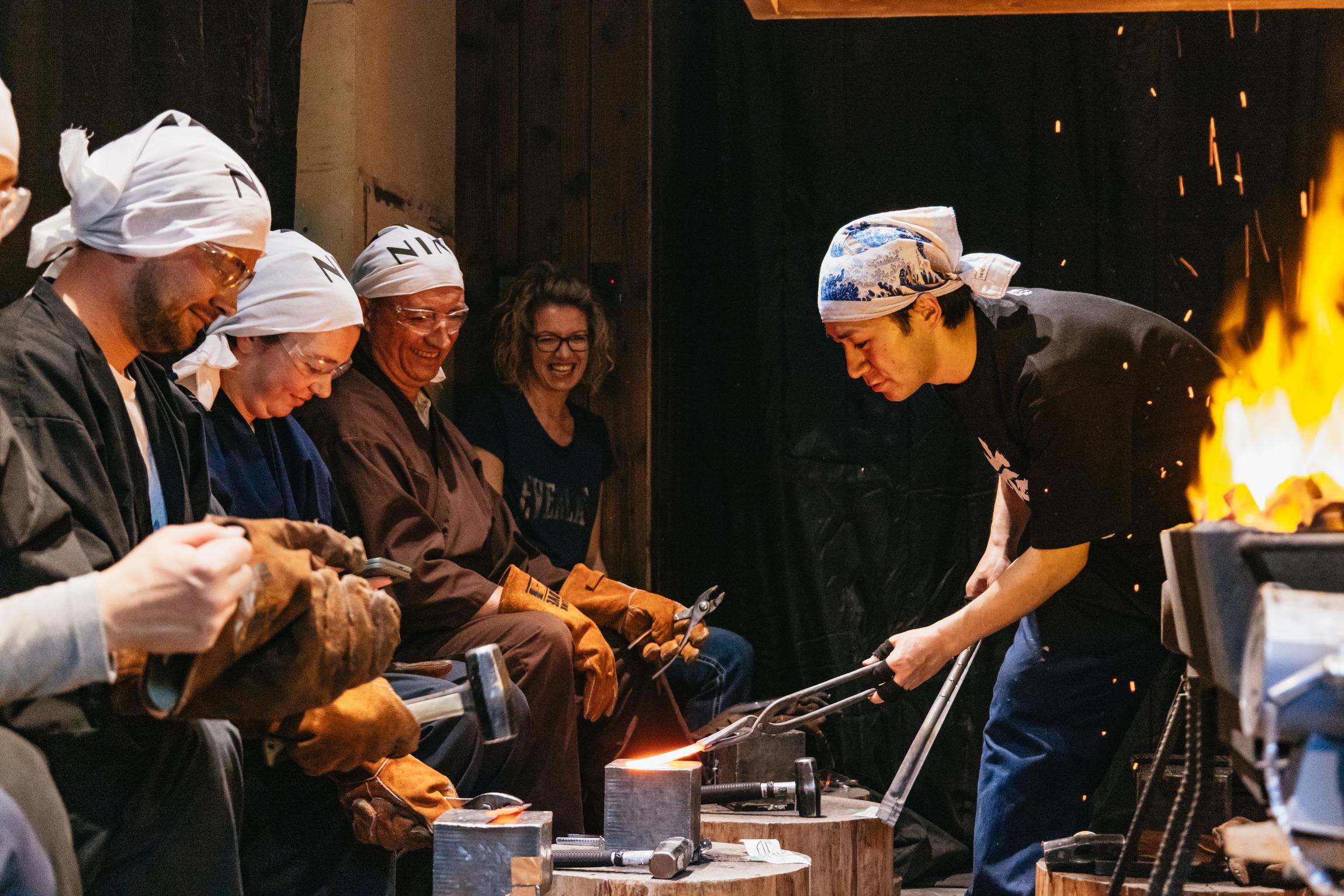
Watch a master smith demonstrate heat-treatment techniques on raw steel before you begin your own shaping work.
Forging offers a profound connection to traditional metalwork, while sharpening masterclasses provide essential maintenance skills; those seeking a deep craft foundation will prefer the japanese knife making workshop in kyoto.
| Feature | Top pick Knife Making Workshop | Sharpening Workshop |
|---|---|---|
Experience Type |
Blade Forging | Edge Maintenance |
Skill Level |
Intermediate | Beginner |
Physical Intensity |
High | Low |
Tools Used |
Hammers and anvils | Whetstones and guides |
End Result |
Custom forged steel blade | Razor sharp kitchen knife |
| See tickets → |
Verdict: Select these japanese knife making workshop in kyoto tours if you prioritize structural creation, or opt for the sharpening alternative to master practical blade care using japanese knife making workshop in kyoto tickets.
Choose your ticket, select your date, and reserve in under two minutes. Secure checkout handled by our verified partner.
Instant confirmation by email, with a mobile voucher you can save offline. No printing, no queuing at a collection desk.
Arrive at the entrance, show your voucher on your phone, and walk in. Most tickets include priority or skip-the-line access.
Practical details for your visit straight from our verified partners — hours, access, rules, and how to get there.
Wear comfortable, closed-toe shoes and natural fiber clothing that you do not mind getting dirty. Avoid loose jewelry, synthetic fabrics that may melt near high heat, and sandals.
Securely store your finished blades in checked luggage for air travel. Always confirm your airline's specific blade transport policies before departure.
Photography is generally permitted in designated areas, but check with your master smith before capturing images of proprietary techniques or private smithy tools.
Many traditional smithies have narrow entrances or raised thresholds. Please contact the workshop operator at the time of booking to confirm specific mobility requirements.
Minimum age requirements often apply, typically 10 to 12 years and older due to the use of heavy machinery and open flames. Supervise children closely at all times in the forge.
No food or drinks are allowed in the immediate work area. Hydration is important, so consume water during scheduled breaks outside the forging zone.
Best time to go, insider tips, nearby landmarks, and the cancellation fine print — flip through to skim what matters to you.
Flexible, no hidden fees.
Full refunds are typically available if cancelled outside the specified advance notice period. Please check specific private package terms as some require booking 7 days in advance.
A traditional Kyoto kitchen blade is not one metal but two: soft wrought iron forge-welded to a thin lamina of high-carbon steel, the hard layer worn back on a whetstone until it stands proud as the cutting edge. That laminate, called kasumi, is the reason a Japanese Knife Making Workshop in Kyoto begins at an anvil rather than a bench. Steel arrives as a dull bar. Heat brings it to a straw yellow, then orange, then the pale colour smiths judge by eye rather than by gauge. The hammer does the rest. Everything the blade will later become is decided in those first minutes. Kyoto's relationship with edged steel is older than its tourism. The city's smiths supplied temple carpenters, tea-house kitchens and, in the Muromachi era, armouries; the same guild discipline later produced the yanagiba and the deba, blades shaped for a cuisine that treats a clean cut as a matter of flavour rather than of speed. Sakai and Seki became the volume centres. Kyoto kept the small ateliers — single forges tucked behind machiya frontages in Gion and along the Kamo River, where a master might finish forty blades a year rather than four hundred. Kyoto knife making tours today enter those same rooms. Little about the floor plan has changed. The work divides cleanly. Forging shapes the bar and sets the laminate. Quenching in water or oil fixes hardness and, on honyaki blades, leaves the hamon, the cloudy temper line that follows the clay the smith painted on before the fire. Grinding removes what the hammer left. Sharpening, done on stones graded from roughly 1000- to 6000-grit, decides how the edge behaves. Handle fitting is joinery rather than metalwork: a burnt tang driven into magnolia, a buffalo-horn ferrule, no glue. Japanese Knife Making Workshop in Kyoto tours are usually built around one or two of these stages, because a full blade takes a smith weeks. That compression is the point. A Japanese Knife Making Workshop in Kyoto tour hands a visitor the part of the craft that cannot be read about: the weight of the hammer, the sound a bar makes when it is ready, the moment a whetstone stops chattering and starts to glide. Kyoto's ateliers are small, and their apprenticeships run long, a decade before a smith signs work. Handing tongs to a stranger for an afternoon is a recent concession, made partly because the trade needs an audience. The blade that leaves in a wooden saya is evidence that someone paid attention.
"Everything the blade will later become is decided in those first minutes."
A step-by-step walkthrough of the visit — what you'll see, how long each stage takes, and the details that matter.
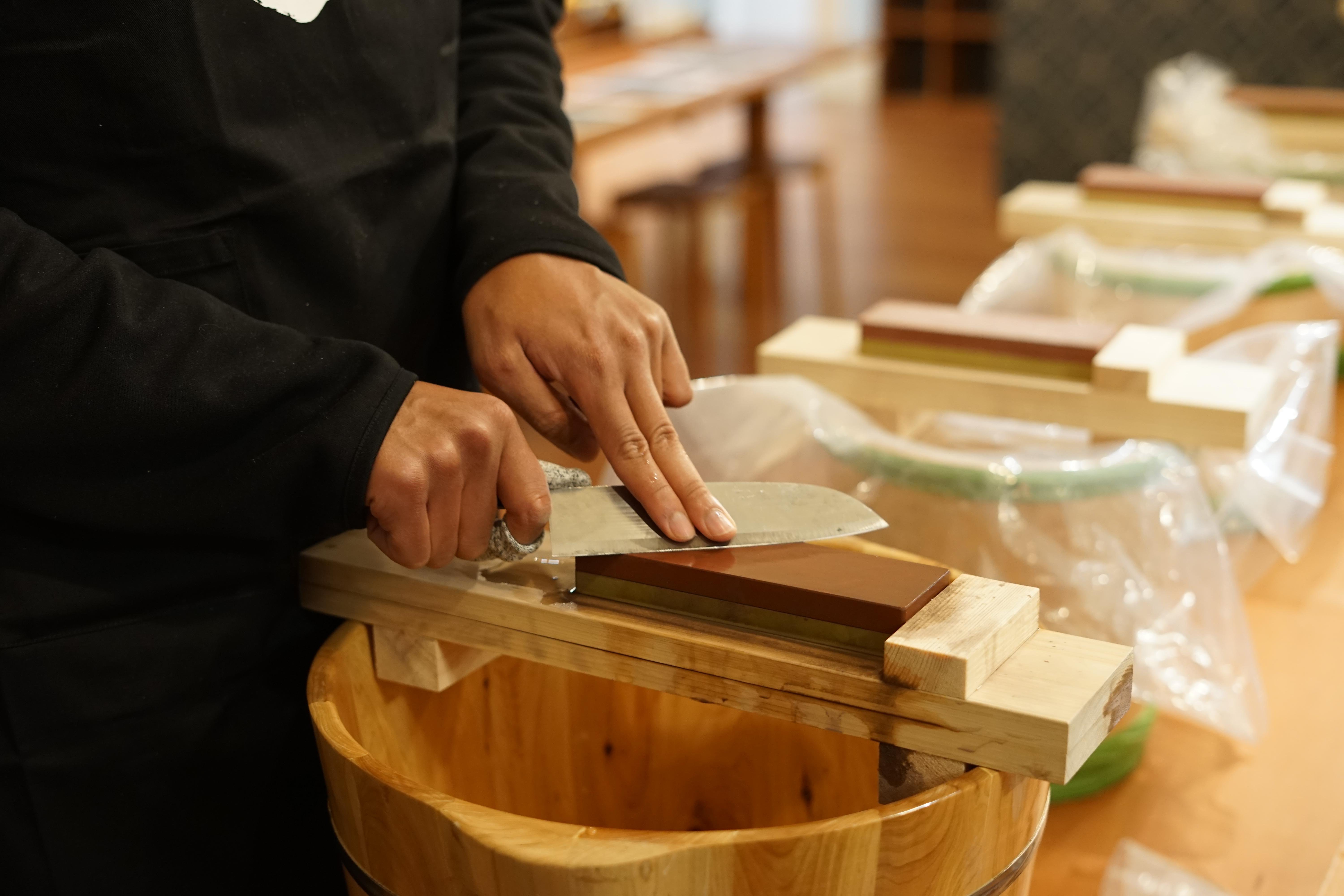
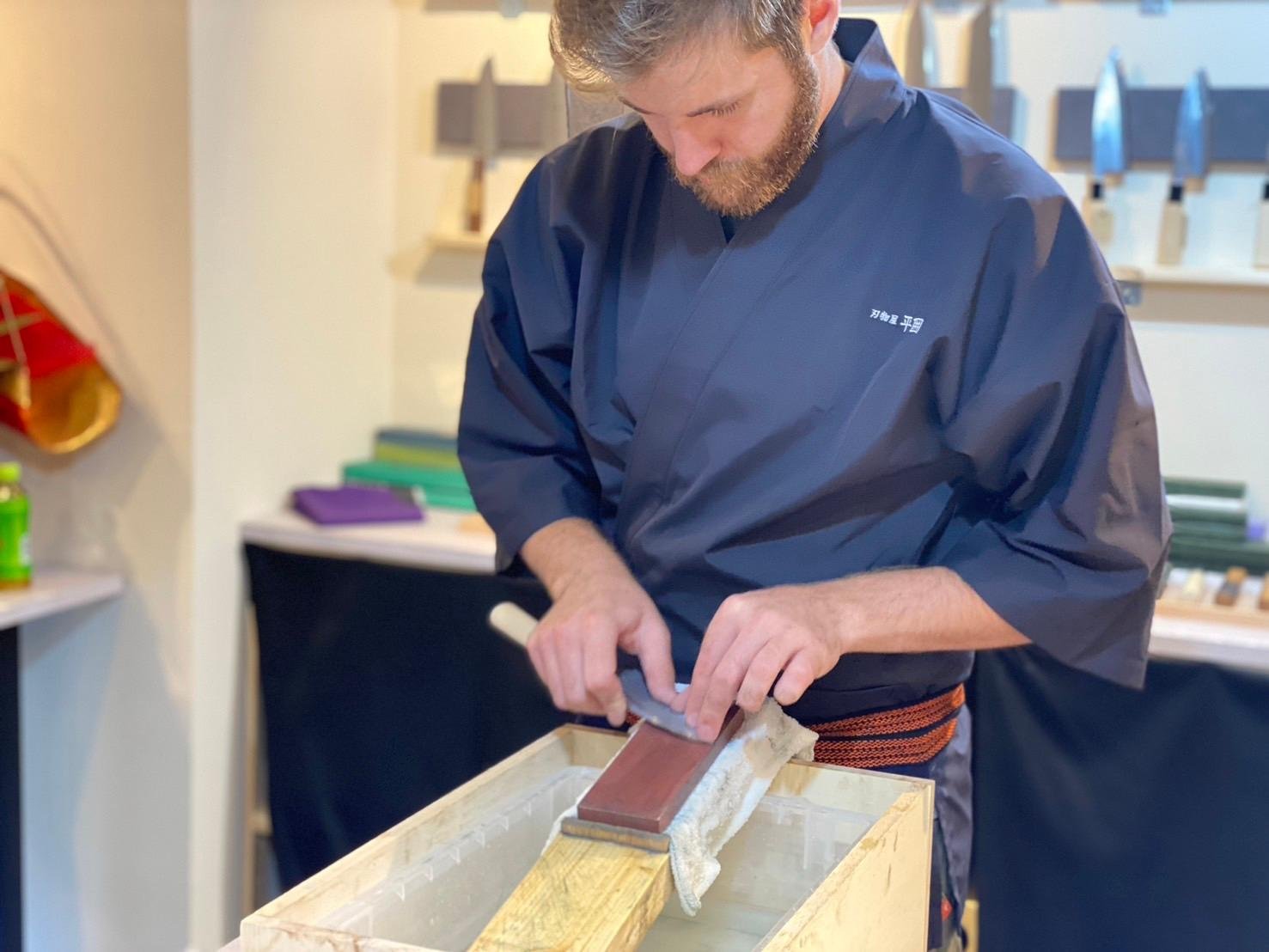
You arrive in Gion in the morning, because the fire is lit early and coal does not wait. Someone hands you an apron, then tongs, then a bar of steel already glowing at one end. The first strike lands badly. The second lands better. For the next stretch you alternate — heat, five or six blows, back to the coals — and the bar flattens under you into something with a spine and a taper. Then the room changes pace. You move to the stones. Water pools on the whetstone, grit turns to grey slurry, and you learn to hold seventeen degrees without a jig while the smith corrects your wrist every third pass. Your forearm complains. The burr appears along the back of the edge, and you feel for it with a thumb rather than look. Handle fitting comes last. A tang is burnt into magnolia, a buffalo-horn ferrule is tapped home, and the join is sanded until the seam disappears under your fingertip. Someone tests the finished blade on newsprint. It parts without tearing. You leave in the afternoon with the knife wrapped, your hands smelling of charcoal and steel, and a sheet explaining how to keep the edge. Japanese Knife Making Workshop in Kyoto tickets cover several hours for a reason: nothing here is done at speed.
The Japanese Knife Making Workshop is open daily from 09:00–18:00. Most workshops should be started between 09:00–16:00 to ensure enough time for completion.
Accessibility varies; some historic smithies in Kyoto have stairs or narrow thresholds. Please check with the specific provider if you have mobility concerns.
No, all necessary tools and safety gear are provided by the master smith at the Japanese Knife Making Workshop. Using personal tools is generally prohibited for safety.
Wear natural fiber clothing and closed-toe shoes. Synthetic fabrics are discouraged at the Japanese Knife Making Workshop because they can be a fire hazard near the forge.
Most workshops in Kyoto are reachable by train or taxi. Some sessions for the Japanese Knife Making Workshop take place in the Kameoka area, requiring a short regional train ride.
Many workshops have a minimum age of 10 or 12 years old. Please verify age restrictions for the Japanese Knife Making Workshop at the time of booking.
Yes, but please ask the master smith before taking photos of the forging process. Respect the private nature of the Japanese Knife Making Workshop studio.
Kyoto offers many sites like the Ikenobo School or Rokkaku-do Temple. These are great additions to a day featuring a Japanese Knife Making Workshop.
Tickets must be booked in advance online. The Japanese Knife Making Workshop requires pre-payment to secure your space.
Cancellations are governed by the specific private package terms. Always review the policy provided at the time of booking your Japanese Knife Making Workshop.